
Summary
A truly energy-efficient home marries meticulous, old-fashioned craftsmanship with modern building science. To dramatically lower utility bills, an energy-efficient home builder focuses on creating an airtight “building envelope” through modern insulation techniques (like closed-cell spray foam), installing high-performance HVAC systems, and utilizing energy-efficient windows.
According to the U.S. Department of Energy, homes built to ENERGY STAR specifications are at least 10% more energy-efficient than homes built to standard code, often achieving an average of 20% total energy savings.
The Foundation of Efficiency: The Building Envelope
When people hear “energy-efficient,” they often immediately think of solar panels or smart thermostats. However, as an experienced residential general contractor, we know that true efficiency starts in the walls. The core of high-performance custom homes is the “building envelope”—the physical separator between the conditioned (heated/cooled) inside environment and the unconditioned outside environment.
A tight building envelope prevents “thermal bridging,” which is when heat bypasses your insulation through the wooden framing of the house. According to the Department of Energy, space heating and cooling accounts for nearly half of the average American home’s annual utility bill. If your envelope is drafty, no amount of smart technology will stop your HVAC system from working overtime. True old-fashioned workmanship means we do not rush the framing and air-sealing process. Every seam, top plate, and window rough-opening is meticulously sealed to prevent air leakage.
Modern Insulation Techniques vs. Traditional Methods
The most critical factor in controlling your home’s internal climate in Middle Tennessee is the insulation strategy. Traditional homes rely heavily on standard fiberglass batt insulation. While cost-effective, fiberglass does not stop airflow; it only slows heat transfer.To build a legacy-quality home, we deploy modern insulation techniques that actively seal the home against the humid Tennessee summers and freezing winter drafts.
| Feature | Traditional Builder Approach | The High-Performance Approach | Efficiency Benefit |
| Wall Insulation | Fiberglass batts stapled between studs. | Closed-cell or open-cell spray foam. | Fills every cavity and gap, creating a solid barrier against moisture and air. |
| Attic Strategy | Vented attic with loose-fill fiberglass on the floor. | Conditioned/Unvented attic with foam applied to the roof deck. | Brings the HVAC ductwork into a climate-controlled space, massively reducing heating/cooling loss. |
| Window Selection | Standard double-pane builder-grade glass. | Low-E (low emissivity), Argon-gas filled windows. | Reflects UV heat away in the summer while trapping interior heat during the winter. |
| HVAC Design | “Rule of thumb” sizing with basic ductwork. | Manual J load calculations and variable-speed systems. | Ensures the system is perfectly sized to the tight building envelope to prevent short-cycling and humidity buildup. |
When we utilize spray foam insulation in the walls and roof lines, we essentially create a thermos effect. This allows your high-efficiency HVAC system to run at a low, continuous speed, drastically reducing your energy consumption and extending the lifespan of your mechanical equipment.
Case Study: A High-Performance Family Estate in Williamson County
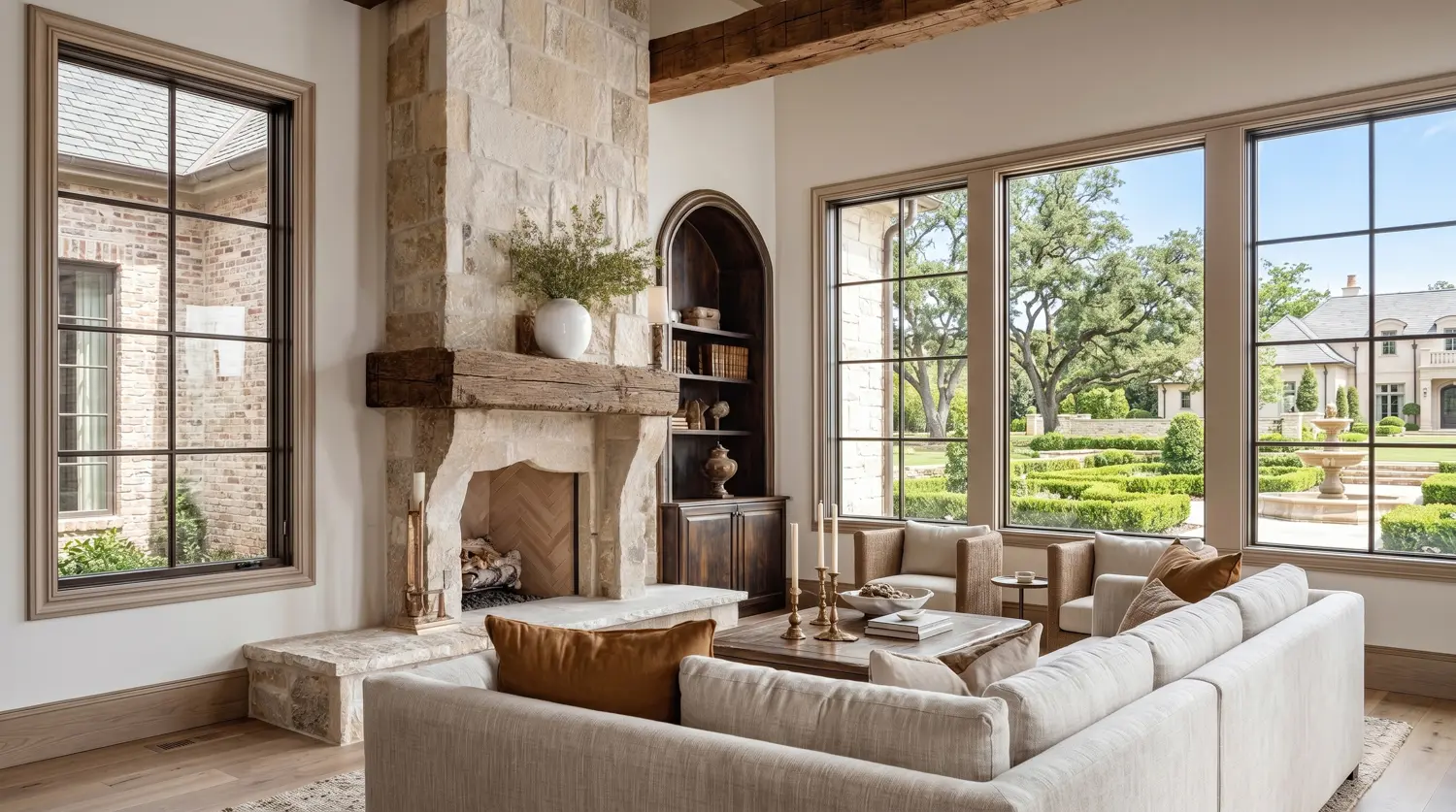
Last year, a client commissioned us to build a sprawling Family Estate in Williamson County. Because the property featured vaulted ceilings and expansive walls of windows overlooking the Tennessee hills, the client was deeply concerned about their potential electric bills.
Instead of compromising on their architectural vision, we leaned heavily into building science. We applied closed-cell spray foam to the entire roof deck, creating a fully conditioned attic space. We then installed a dual-fuel variable-speed HVAC system and customized the ductwork to eliminate air leakage. Even during the brutal 100-degree heat waves of July, the primary residence maintained a crisp 69 degrees. Their first month’s energy bill was nearly 40% lower than their previous, much smaller, code-built home. This is the power of combining timeless architectural design with an uncompromising approach to energy efficiency.
Frequently Asked Questions About Energy-Efficient Home Building
Are energy-efficient custom homes more expensive to build? Upfront, high-performance materials like spray foam and variable-speed HVAC units cost more than builder-grade materials. However, the month-over-month utility savings, reduced maintenance costs, and increased resale value provide an excellent long-term return on investment.
What is the best insulation for a home in Middle Tennessee? Because of our high humidity, spray foam insulation is highly recommended. It acts as both a thermal insulator and a moisture vapor barrier, preventing condensation and mold growth inside your wall cavities.
What makes a home ENERGY STAR certified? An ENERGY STAR certified home undergoes rigorous third-party testing and inspections. It must feature a complete thermal enclosure, high-efficiency heating and cooling, a comprehensive water management system, and energy-efficient lighting and appliances.
Can I make a luxury remodel energy efficient? Yes. During a luxury remodel, we can retrofit your existing structure by air-sealing the attic, upgrading to Low-E windows, replacing outdated ductwork, and injecting insulation into older wall cavities.
Conclusion: Build a Home That Works for You
Investing in an energy-efficient home is not just about lowering your carbon footprint; it is about unmatched daily comfort, superior indoor air quality, and protecting your family from skyrocketing energy costs. You deserve a builder who takes the science of construction as seriously as the aesthetics.
If you are ready to build a high-performance custom home in Dickson, White Bluff, or the surrounding areas, contact Highland Rim Homes today.